
Property developer & community manager, UAE
65,000 homes and 500 subcontractors on one live system.
- work orders a year
- 4M+
- MEP assets tracked
- 300K+
- subcontractors on the platform
- 500
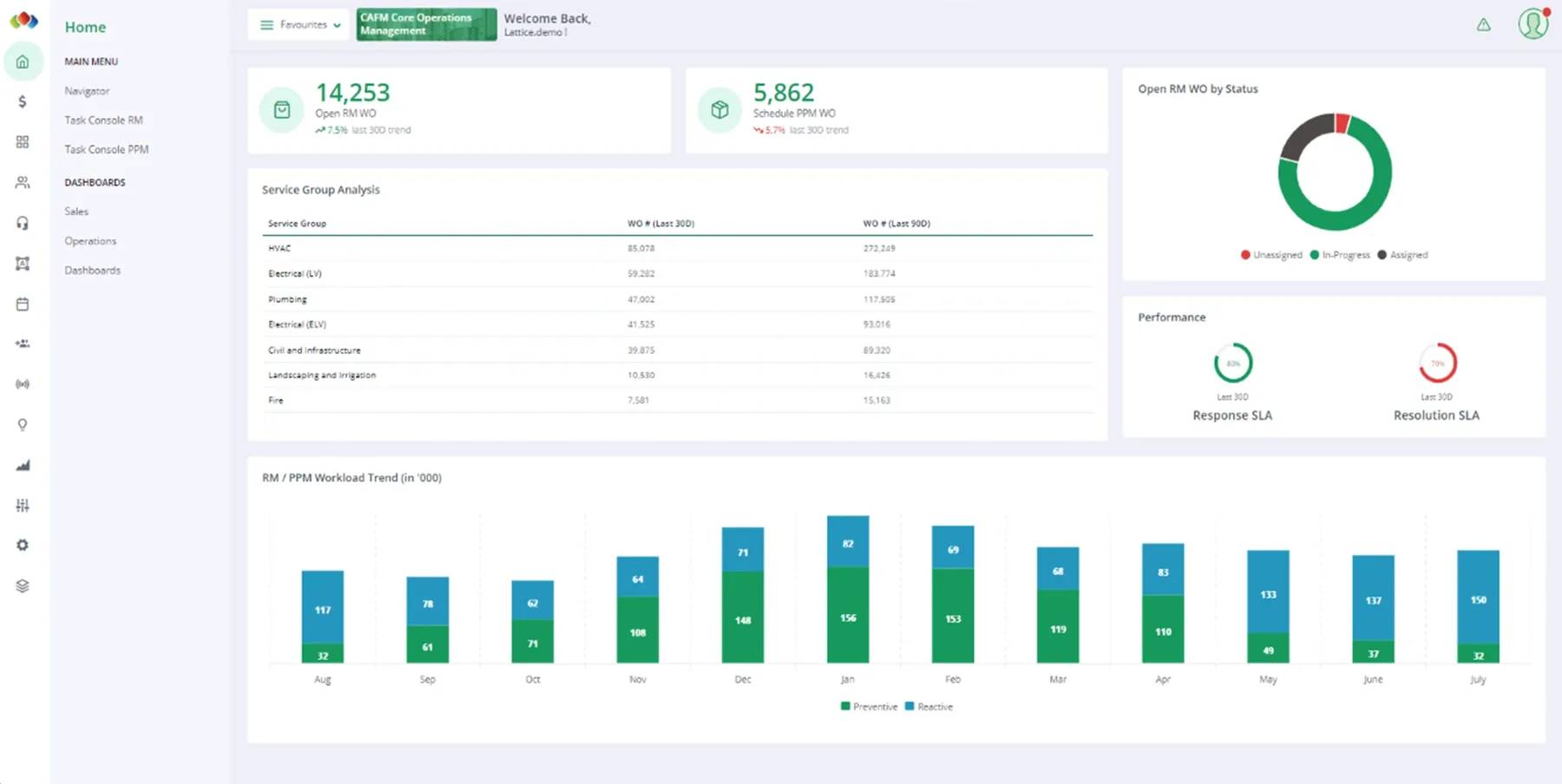
Reflexion puts work orders, planned maintenance, assets and contractor SLAs in one system for property owners and FM service providers in Riyadh, Jeddah and across the Kingdom. It is built in Dubai by Lattice Software Solutions, which has worked in the GCC since 1994.
Running portfolios in the UAE and Oman for clients including






MEFMA and Frost & Sullivan put the Saudi facility management market at USD 39.4 billion in 2024, rising to a projected USD 52.5 billion by 2029, and link the growth to a USD 2.1 trillion pipeline of Vision 2030 giga and mega projects. Those include the PIF giga-projects (NEOM, Red Sea Global, ROSHN, Qiddiya and Diriyah) alongside new hospitals, schools, offices and communities. Each handover turns a construction programme into decades of operation and maintenance, whether the owner runs it in-house or appoints an FM contractor.
Whether you call it CAFM, CMMS or maintenance management software, most of what a Saudi portfolio needs is what any large portfolio needs: a complete record of every job and a fair measure of every contractor. Four requirements are specific to the Kingdom, and each is easier to settle before a demo than after a contract.
ZATCA has introduced e-invoicing in two phases. Phase 1 (Generation) has applied since 4 December 2021. Phase 2 (Integration) began on 1 January 2023 and is rolling out in waves: the invoicing solution connects to ZATCA's FATOORA platform through an API, and each tax invoice (the kind usually issued between businesses) must be cleared by ZATCA before it is shared with the buyer. Simplified invoices are reported within 24 hours.
The 25th wave, announced on 24 July 2026, covers taxpayers whose VAT-subject revenue exceeded SAR 187,500 in any year from 2022 to 2025, and they must integrate by 1 February 2027. Few FM companies or subcontractors of any size will fall below that line.
A CAFM system does not usually issue the tax invoice; the finance system does. What the CAFM holds is everything the invoice depends on: the contract, the rate card, the completed work orders, approved quotations and the SLA deductions. If that data is wrong or late, a cleared invoice is only a faster way to bill the wrong amount. Ask any vendor to show how it reaches your invoicing solution.
The National Cybersecurity Authority's Essential Cybersecurity Controls apply to government entities, their companies and affiliates, and private organisations that own, operate or host critical national infrastructure. The 2018 edition required covered organisations using cloud services to host and store their information inside the Kingdom. The 2024 revision moved data localisation to the National Data Management Office, and sector rules can still require it, so the question has not gone away.
Separately, the Personal Data Protection Law, overseen by SDAIA, has been fully enforceable since 14 September 2024 and has its own rules on transferring personal data outside the Kingdom. A CAFM system holds more personal data than people expect: resident and tenant names, phone numbers, unit numbers, technician locations and site photographs.
If you serve a ministry, a government-owned developer or a giga-project, expect the hosting question first. Reflexion is offered as SaaS, as a single-tenant private cloud, or on-premise on your own infrastructure, which keeps the data on servers you choose.
The Law on Implementation of the Saudi Building Code (Royal Decree M/43, 2017) applies the code to the design, construction, operation, maintenance and modification of buildings, and lists the General Directorate of Civil Defense among the agencies that monitor it. The fire code within it, SBC 801, covers fire protection systems such as sprinklers, standpipes and fire alarms.
For an FM team the practical consequence is evidence. When Civil Defense, an insurer or the owner's consultant asks for a year of fire pump tests, the answer should be a report filtered by building and asset, showing who did each test, when, where, and with which photographs. Statutory checks belong in the PPM schedule with the rest of the maintenance, not in a separate file.
Arabic is the language of government correspondence and, on many sites, of the supervisors and technicians closing work orders. Site teams are usually mixed, so the useful test is whether a technician can use the mobile app in the language they work in, not whether the desktop has an Arabic menu.
Owners and authorities may also want reports in Arabic and English side by side, and some government documents and contracts are dated in the Hijri calendar. Check how the system handles both before you build your reporting around it. Lattice runs implementation and support from Dubai with Arabic-language capability.
Sources: ZATCA e-invoicing and its 25th wave announcement; the NCA Essential Cybersecurity Controls (ECC-1:2018) and Clyde & Co's note on ECC-2:2024; the Law on Implementation of the Saudi Building Code; MEFMA and Frost & Sullivan, August 2025. Checked in October 2026. Regulations change, so confirm current requirements with the authority or your advisers.
The modules owners and FM providers use day to day, on the web and on site.
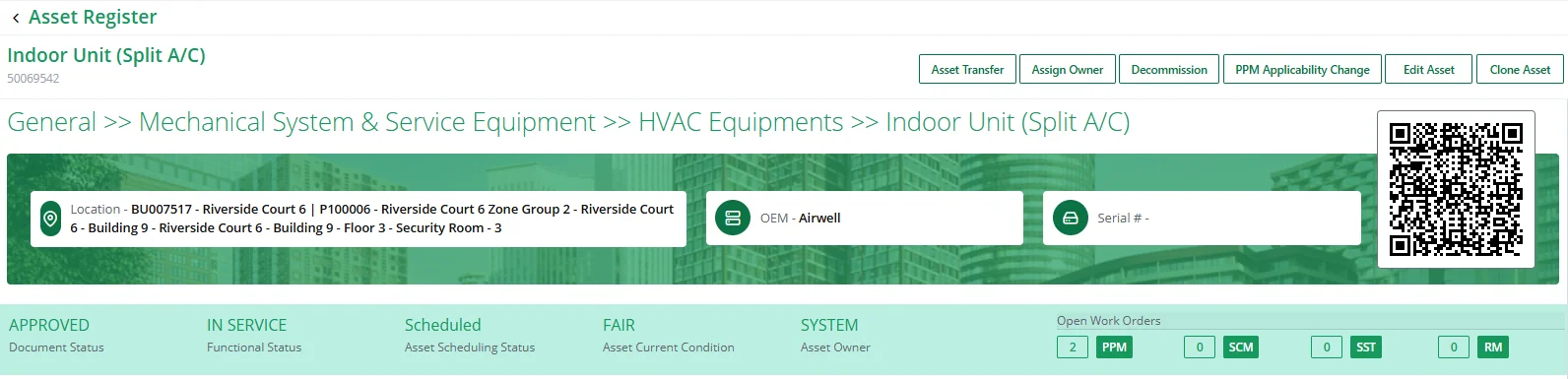
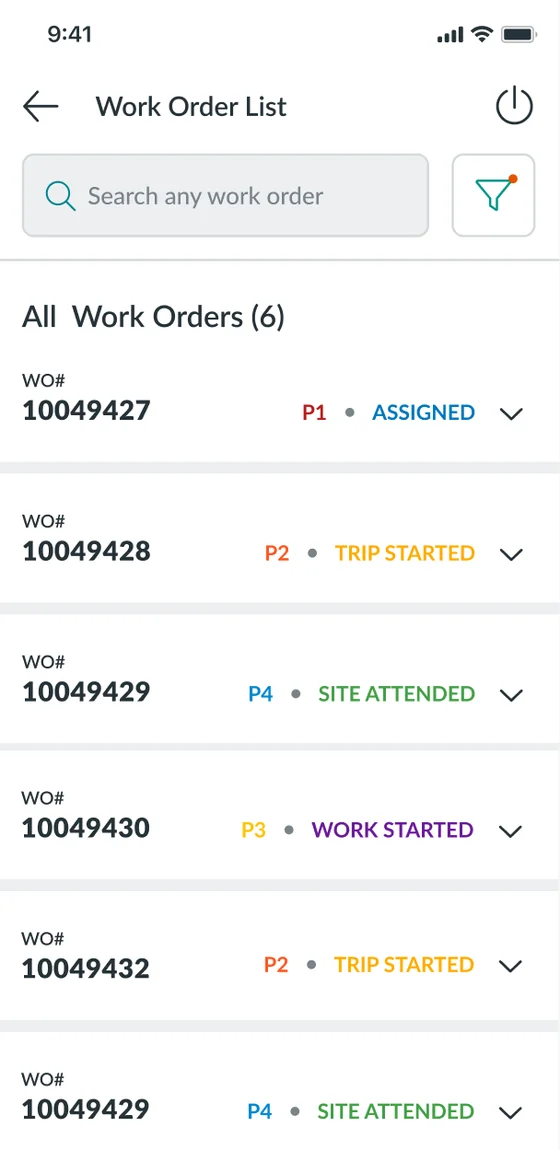
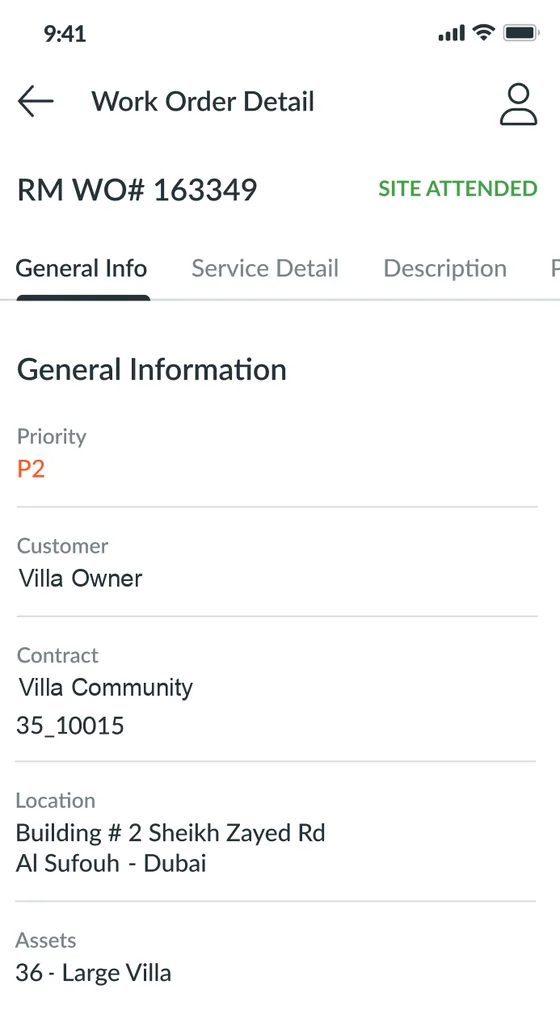
Many large Saudi assets are maintained by an appointed FM company under a multi-year contract, and those contracts are re-tendered. If the contractor supplies the CAFM system, the asset register, the maintenance history and the compliance trail leave with them, and the incoming provider starts again from a survey.
Owner-controlled CAFM turns that around. The platform belongs to the owner, each contractor works inside it, and the history stays with the building through however many providers come and go. The NCA's 2018 controls asked the same of cloud services: data returned in a usable format when the service ends. For portfolios of more than a few buildings, this is often the most valuable structural decision in an FM technology programme.
They separate systems that demo well from systems that survive the first eighteen months on site. Ask them of us too.
Ask to see the integration or export, the fields it carries, and who maintains it when ZATCA updates its specifications. A spreadsheet that someone rekeys each month is not an answer.
Get the country, the data centre and the hosting model in writing, including where backups are kept. If the NCA controls or sector rules apply to you, check the answer with your own compliance team before you shortlist.
Basement plant rooms and rooftop chiller decks have no signal. Watch a technician close a job in Arabic with the phone in flight mode, then watch it sync when the connection returns.
Pick a real asset, such as a fire pump, and ask for its test history with timestamps, technicians and photographs. That is the shape of what an inspection asks for.
The answer should be a complete export of assets, history and documents in a format another system can import, agreed in the contract rather than negotiated at exit.
Find out which team takes a priority call, in which language and time zone, and who is on site at go-live. Lattice supports clients from Dubai, which is one hour ahead of Riyadh.
If you are still mapping the category, start with the difference between CAFM, CMMS and IWMS, or the short definitions of CAFM and CMMS.
If you are choosing a service provider as well as a system, read our guide to facilities management companies in Saudi Arabia. For portfolios that cross the border, the CAFM software for the UAE page covers Dubai Municipality, Civil Defence and owners' association requirements.
Reflexion clients, kept anonymous here. We share their names on reference calls.
Property developer & community manager, UAE

Integrated FM service provider, UAE

Mall operator, Dubai & Abu Dhabi
If yours isn't here, bring it to the walkthrough.
The terms mean the same in the Kingdom as anywhere else. A CMMS manages maintenance: assets, work orders, planned maintenance and spare parts. CAFM covers that and adds soft services, space, contracts and contractor performance. Saudi buyers search for CMMS more than UAE buyers do, but if you run whole buildings with cleaning, security and landscaping alongside engineering, CAFM is usually the category to shortlist.
The tax invoice is normally issued by your finance or ERP system, and that is the solution that connects to ZATCA's FATOORA platform. The CAFM system should feed it accurate contract, work order, quotation and SLA deduction data, so the invoice reflects the work actually done. Ask vendors to show that link working, and confirm your own wave and integration date with ZATCA.
It depends on who you are and whose data you hold. Government entities, their companies and operators of critical national infrastructure fall under the NCA's Essential Cybersecurity Controls and may face data localisation requirements through the National Data Management Office or sector rules. Personal data is also covered by the PDPL's rules on transfers outside the Kingdom. Confirm your position with your compliance team, then choose a hosting model that fits it.
For office users, often not. For supervisors and technicians it frequently does, and it is one of the more common reasons adoption stalls after go-live. Test the mobile app in Arabic rather than the desktop, and ask whether reports can be produced in Arabic and English.
SaaS, a single-tenant private cloud, or on-premise on your own infrastructure, depending on your IT and data residency requirements. The technician app runs on iOS and Android and works offline, syncing when the connection returns.
For a single building with a clean asset list, four to eight weeks. For a multi-building portfolio that needs a physical asset survey, three to six months, with the survey rather than the software configuration driving the timeline. Surveying and tagging assets is usually the largest single line in the first year, and the part that decides whether the system works.
In practice, CAFM means having one system that every request, job, inspection and asset record passes through. For a UAE property owner or FM team, the meaning is less about the software than about the change it brings: work stops living in phone calls, WhatsApp groups and spreadsheets, and every job gets a timestamp, an owner and an evidence trail that can be checked later.
The full form of CMMS is Computerised Maintenance Management System, also spelled Computerized. In practice, CMMS means running maintenance from a system rather than from memory and paper: every asset has a record, every job is logged against it, preventive work is scheduled automatically, and the maintenance team can show what was done, when and at what cost.
A CAFM system is the software platform an FM operation runs on: a set of connected modules built around a shared asset register, used by managers through a web application and by technicians on mobile. Viewed as a system, it is a database of buildings and equipment, a workflow engine that turns requests and schedules into jobs, and a reporting layer that shows whether the work met the contract.
An SLA (Service Level Agreement) in facility management is the part of an FM contract that defines how quickly and how well the service provider must respond to and resolve issues, usually by priority level, and what happens when it does not. It turns a general expectation such as prompt repairs into measurable targets that can be tracked job by job.
SFG20 is the UK industry standard library of planned maintenance schedules for buildings, created in 1990 by the Building Engineering Services Association (BESA). For each asset type it sets out which maintenance tasks to carry out, how often, and with what skills, so owners and contractors can build PPM regimes from a recognised baseline instead of writing them from scratch.
Pick a time that suits you. Tell us about your buildings in Riyadh, Jeddah or the Eastern Province, or the FM contracts you run, and we'll walk you through Reflexion with examples close to your own operation.