
Property developer & community manager, UAE
65,000 homes and 500 subcontractors on one live system.
- work orders a year
- 4M+
- MEP assets tracked
- 300K+
- subcontractors on the platform
- 500
Every work order, asset and contractor across your portfolio, in one system that belongs to you. Change FM providers without losing a single maintenance record.
Used by property owners and FM companies including





Owners use Reflexion to see and control what happens in their buildings. FM companies use it to run the work and get paid for it. When both work in the same system, there is one version of what happened.
One system across your towers, communities, malls and hospitals, run on your terms rather than your contractor's. Every work order shows who did the job, when they did it, before-and-after photos and the materials used.
Contracts, quotations, technicians, materials, SLAs and billing in one system, so you can see what each contract earns. Reusable templates for contracts, locations, assets and SLAs make a new contract quicker to mobilise.
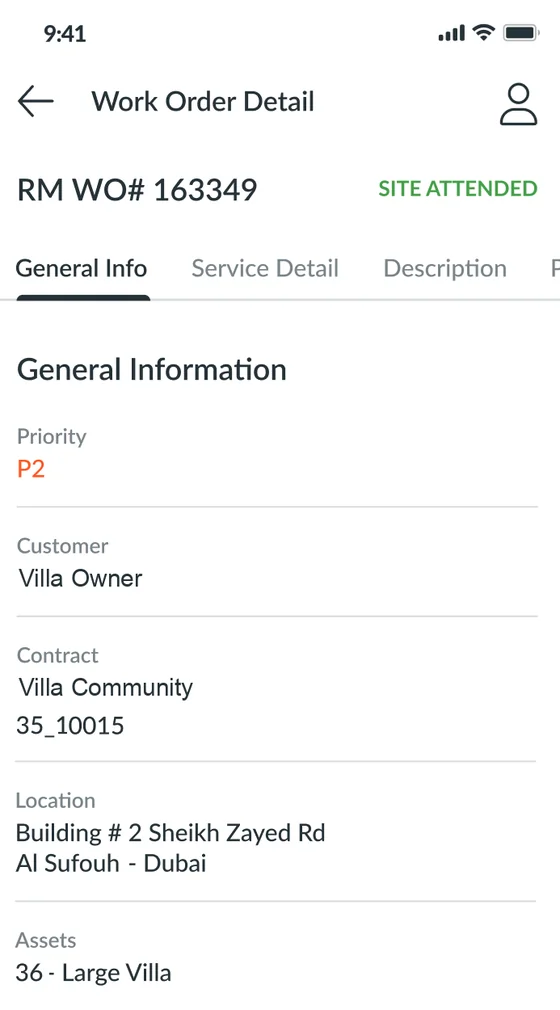
This is a real work order from our demo environment, with names changed. The technician closed it, the supervisor sent it back, and every step was time-stamped against the person who took it.
5 Nov, 3:01 pm
The technician starts the job on site.
5 Nov, 4:00 pm
The technician closes the job and submits it for approval.
6 Nov, 3:17 pm
The supervisor rejects the job completion report and the work order reopens.
13 Nov, 4:30 pm
The technician acknowledges the reopened job and starts the trip.
13 Nov, 4:31 pm
Site attended. The reason for the hold is recorded against the job.
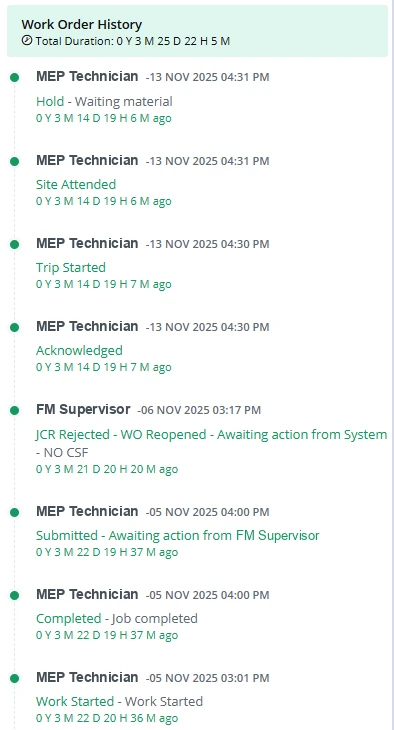
Owners see this trail for every job across the portfolio. FM providers use the same trail to show the work was done.
Reflexion clients, kept anonymous here. We share their names on reference calls.
Property developer & community manager, UAE
Integrated FM service provider, UAE

Mall operator, Dubai & Abu Dhabi
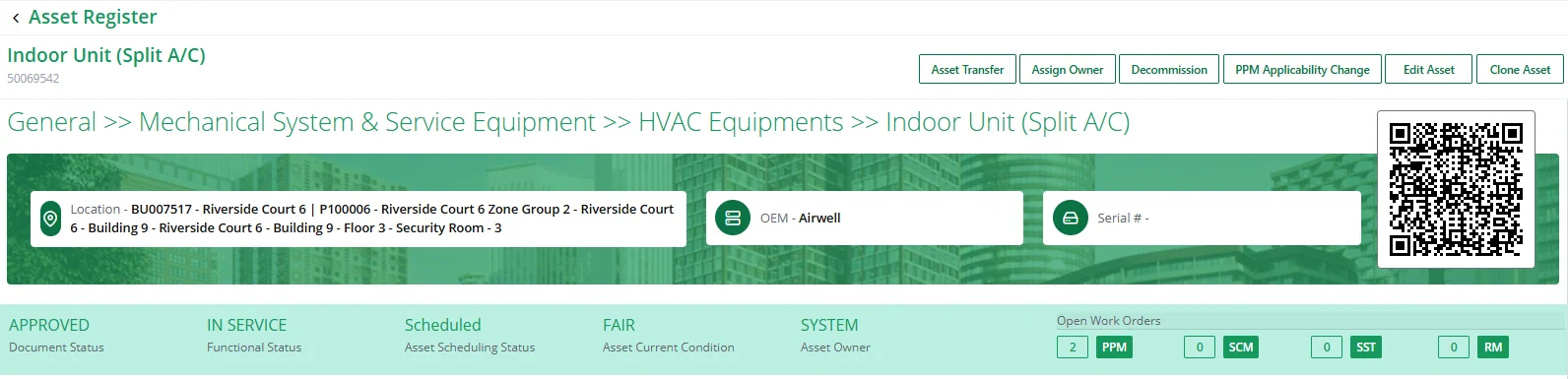
The modules owners and FM providers use day to day, on the web and on site.
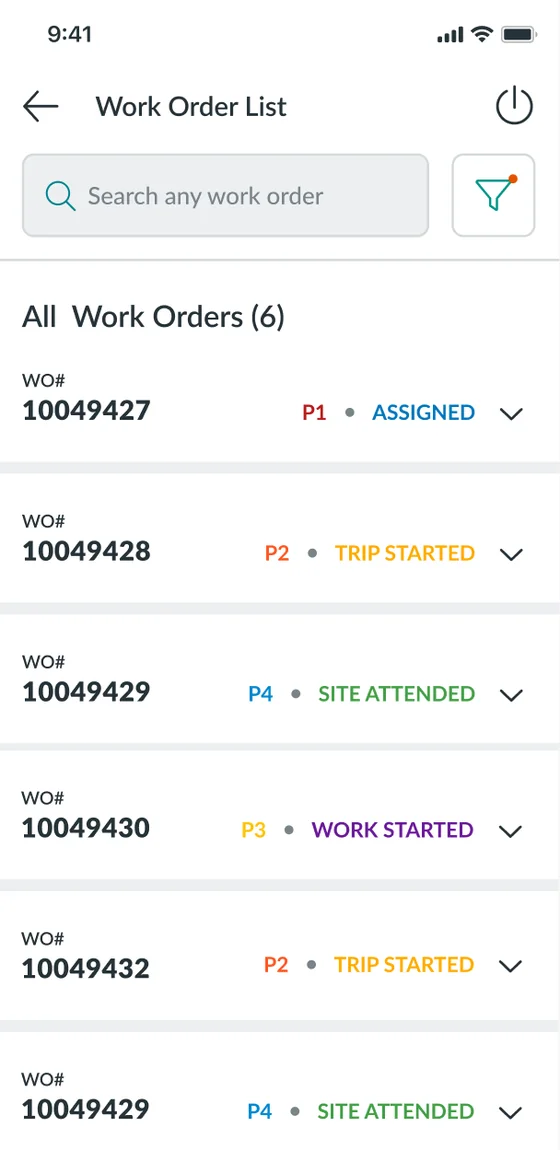
Reflexion helps property and facility teams stay aligned with Dubai and UAE compliance requirements, including Dubai Municipality, RERA, and Civil Defence standards. The audit and inspection module makes it easier to track checks, document findings, and support compliance reporting across your portfolio, while Guard Patrol & Incidents keeps security rounds and incident records in the same system. This gives owners clearer visibility and stronger control over regulatory obligations.
If yours isn't here, bring it to the walkthrough.
Reflexion combines operations, service provider contracts, SLAs and performance into one intelligent platform. It focuses on accountability and outcomes, not just work orders.
Reflexion supports RM, PPM, asset life cycle, manpower / material costs, PTW, audits, inspections and incident management. All activities are centrally tracked and SLA-governed.
Most business rules, SLAs, workflows, PPM task-sheets, statutory requirements, checklists are pre-defined and configurable. This reduces dependency on custom development and speeds up rollout.
SLAs and KPIs are system-calculated using configurable rules and weightages. Scores, penalties, and waivers are fully transparent and alleviates disputes.
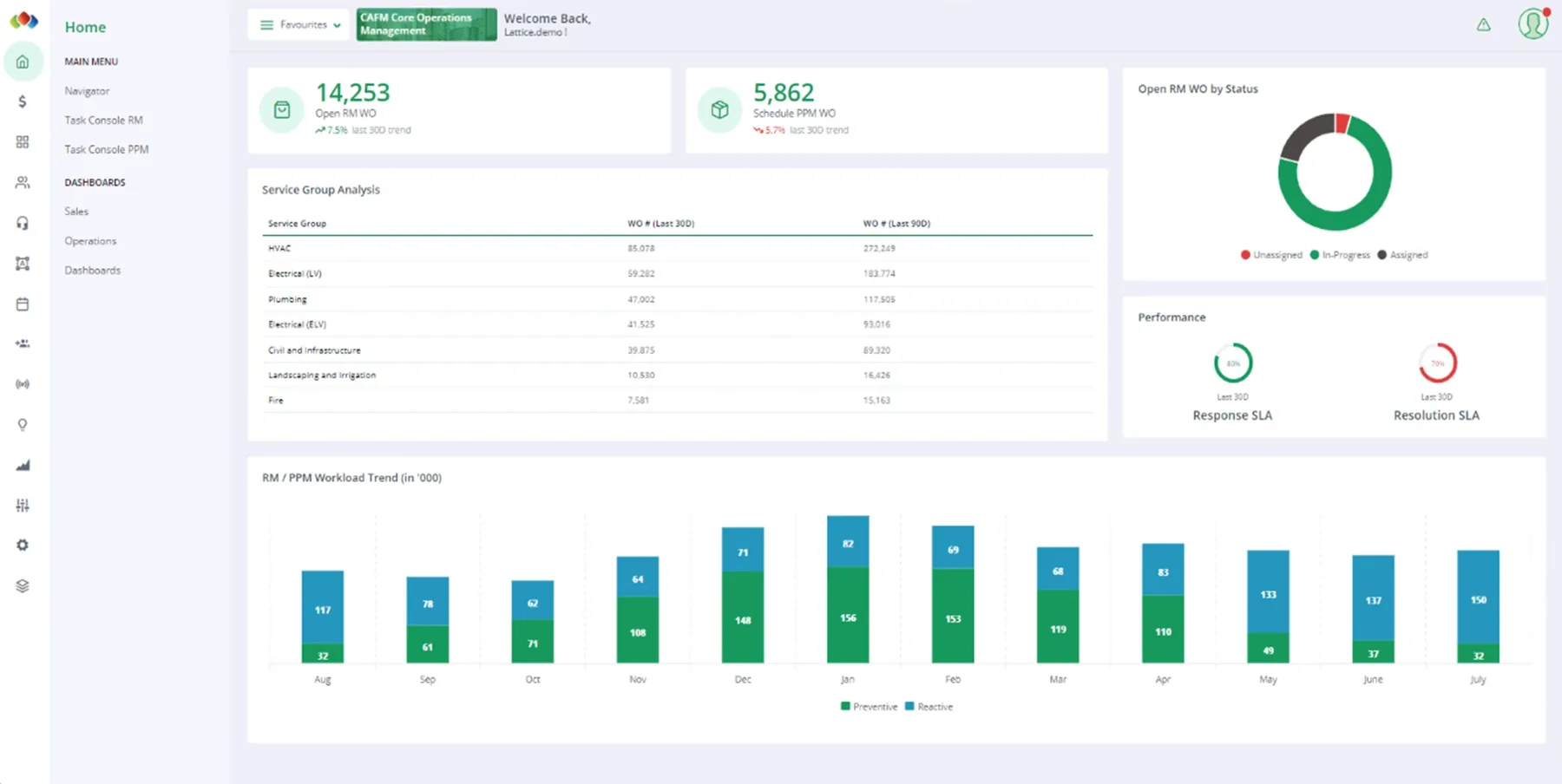
Property owners get real-time visibility into performance, compliance, and costs. Dashboards and reports support informed governance.
Service providers gain better cost control, faster billing, improved technician productivity, and higher contract renewal confidence.
Work orders are auto-assigned based on skills, availability, duty roster, and location. Manual override is available where operationally required.
Reflexion enables structured audits, inspections, scoring, and evidence capture via mobile apps. Findings are tracked through closure.
The service provider technicians can flag out-of-scope work directly from the app. Quotations are generated using approved rate cards and workflows.
Yes, the mobile app supports offline operation with automatic sync when connectivity is restored. This ensures uninterrupted execution in the field.
Reflexion integrates with ERP, CRM, IoT, BMS, and payment systems through APIs. It fits into existing enterprise ecosystems.
Yes, Reflexion is designed as a secure, scalable SaaS solution. It supports cloud and hybrid deployment models.
Yes, it is built for multi-site, mixed use environments with role-based access. Each stakeholder sees only what is relevant to them.
CAFM stands for Computer-Aided Facility Management. It is software that gives a facilities team one system of record for its buildings — the asset register, planned and reactive maintenance, work orders, contractors, space, and compliance evidence. The point of a CAFM system is that everything about a property portfolio lives in one place instead of across spreadsheets, WhatsApp groups and a filing cabinet.
A CAFM system is the software platform an FM operation runs on: a set of connected modules built around a shared asset register, used by managers through a web application and by technicians on mobile. Viewed as a system, it is a database of buildings and equipment, a workflow engine that turns requests and schedules into jobs, and a reporting layer that shows whether the work met the contract.
PPM stands for Planned Preventive Maintenance. It is maintenance carried out on a schedule to keep equipment working, rather than in response to something breaking. A PPM schedule sets out what gets serviced, how often, by whom, and against which standard — and in most facility contracts it is the work the client is actually paying for.
A work order is the instruction to carry out a specific piece of work, and the record of what happened when it was carried out. In facility management it is the basic unit of everything — the asset it relates to, who raised it, who did it, how long it took, what it cost, and whether it met the service level agreed with the client.
An SLA (Service Level Agreement) in facility management is the part of an FM contract that defines how quickly and how well the service provider must respond to and resolve issues, usually by priority level, and what happens when it does not. It turns a general expectation such as prompt repairs into measurable targets that can be tracked job by job.
Pick a time that suits you. Tell us about your buildings or your FM contracts, and we'll walk you through Reflexion with examples close to your own operation.